Rumours: The tragic element is lacking
- Anna Jane Begley
- Dec 12, 2024
- 3 min read
Updated: Apr 22, 2025

As violence escalates in the Middle East, far-Right protests burgeon across Europe, and global temperatures ascend at an exponential rate, Rumours is a timely and trenchant film that leaves you wondering whether to laugh or cry at the stupidity of it all. And perhaps debating whether it goes far enough in its attack of the small group of people facilitating such stupidity.
Directed by filmmaking trio Guy Maddin and Evan and Galen Johnson, this absurd sociopolitical satire follows the G7 leaders as they attempt to write the draft of their letter of intent which, we learn, needs to be verbose enough to justify the summit’s existence but vague enough not to commit to, well, anything.
The film opens with a Wes Anderson-esque ceremony in which we meet the leaders of Germany, France, Japan, the US, Italy and the UK. Oh, sorry – and Canada. Germany’s Hilda (a comically perfect Cate Blanchett) is leading the summit and goes to great lengths to impress her guests, even organising a visit to see the cadaver to a disgraced political leader of the Iron Age; all grinning in front of photographers, wellies and shovels in tow.
After retreating to a bandstand in a scenic Saxony forest, chaos soon unfolds as the leaders realise they have been deserted and some sort of apocalypse/zombie invasion has commenced.
The two female leaders, Hilda and the UK’s Cardosa (Nikki Amuka-Bird), naturally assume the leader roles in trying to direct the group back to civilisation. Meanwhile Italy (a brilliantly meek Rolando Ravello) acts as official ham provider and the US president – clearly a riff on Joe Biden and played by Charles Dance with an English accent, which makes for arguably the best joke of the film – gets carted around in a wheelbarrow.

This absurd sociopolitical satire follows the G7 leaders as they attempt to write the draft of their letter of intent
But the scene stealer is Roy Dupuis’ Maxime, the prime minister of Canada, whose emotional volatility, sexual appetite and grey man bun bring the majority of the satire element. Through his woeful lack of self-awareness and ceaseless self-absorption, Maxime is perhaps the closest to a real-life “Western” leader and therefore brings a tragic reality to Maddin and Johnson’s otherwise light-hearted commentary.
It’s this light-heartedness, however, that’s at the root of this film’s problem: in satirising deeply real and deeply horrendous political issues to the absurdist extreme, like Adam McKay’s environmental satire Don’t Look Up, the film comes across as almost facetious in its handling of the subject matter.
There are some good laughs for sure, but Maddin and the Johnsons stop short of making you feel the consequences of the leaders’ incompetencies (which, in fairness to McKay, is somewhat achieved in his work). An extended joke regarding paedophilia in particular feels cursory – the point no doubt needs to be made, but after that it becomes a comic trope intended for nothing but smug chuckles from the audience.
The ambition is noble and the acting fabulous in a deliberately tacky, low-end kind of way, but sadly the oversimplified message on current geopolitics doesn’t hit as hard as perhaps its creators think it does. The tragic element fails to translate in what I think – or hope – is supposed to be a pertinent tragicomedy.
If I have to imagine a political wine, my first thought would be Burgundy – a favourite of political leaders for its prestige and sky-high price points, and a region that has hiked its prices for consumers in recent years for various reasons, it has gained a reputation in some circles for being overpriced and dare I say – in comparison to the funkier, “natural” wines that have soared in popularity – a bit of a “Boomer” wine.
It’s also a region that has been at the centre of the wine industry’s climate change debate with Decanter’s first climate conference in 2006 being headlined: ‘Pinot impossible in Burgundy over next 50 years’. And don’t forget Greenpeace’s 2009 report which claimed that “climate change could destroy Burgundy.” So far that hasn’t been the case, but as one of the oldest and esteemed wine regions, Burgundy finds itself at the centre of contemporary debates.
Better safe than sorry, so enjoy it while you can – and do so at a decent price. The Wine Society’s Chiroubles, Domaine de la Boisselière 2023 from Beaujolais in Burgundy comes in at under £15 and tastes of strawberries, red cherries and violets. Yes, you’ll have to pay for The Wine Society’s lifetime membership to access it, but if there’s one elite group to be a part of, arguably it should be this one.
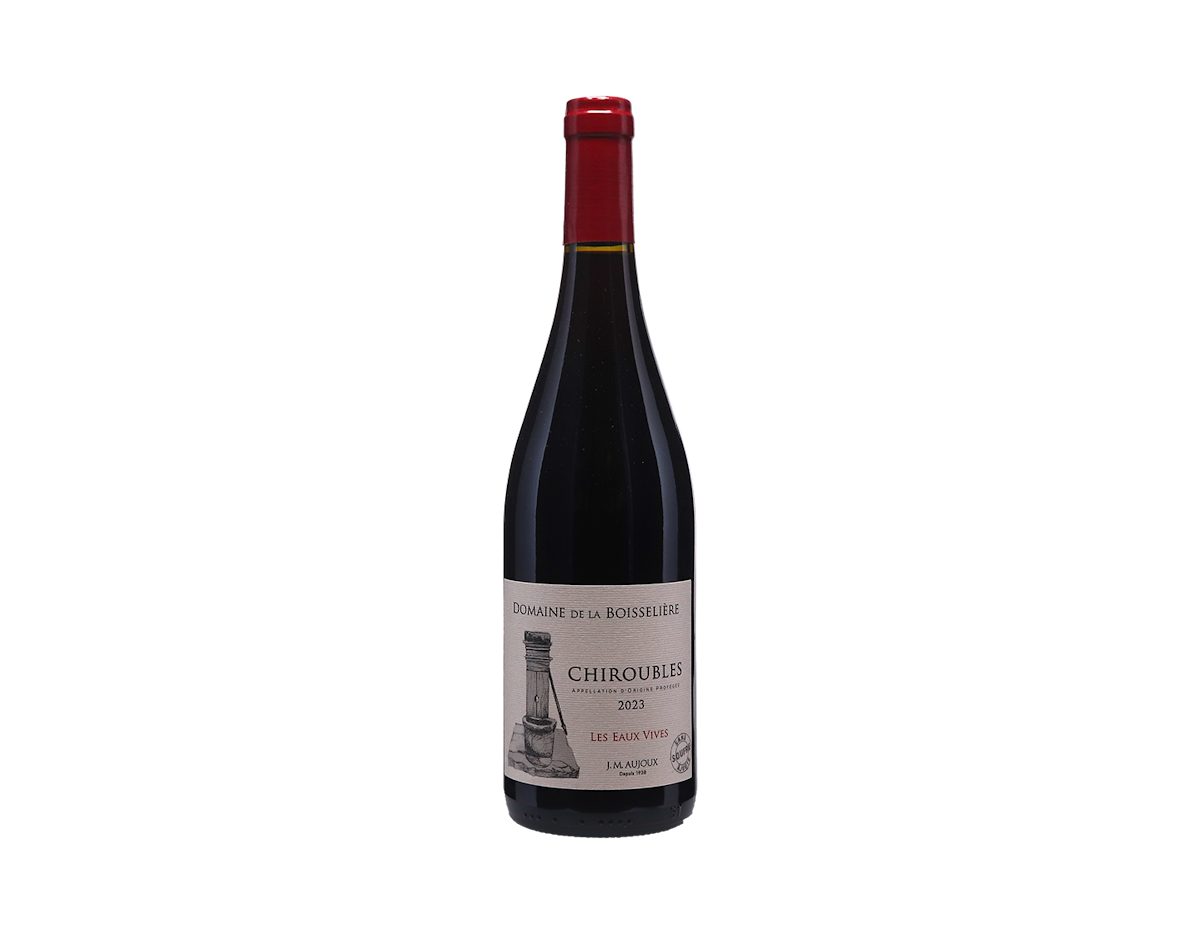
Rumours is in cinemas now. Chiroubles, Domaine de la Boisselière 2023 (£13.50) is available on The Wine Society's website.



Comments